Zolify vs US-Based Zoho Consultants for eCommerce: What You're Actually Comparing
US Zoho consultants charge $150-250/hr. Most aren't eCommerce specialists. The price gap is real, but the more useful question is what you're getting on each side of it.
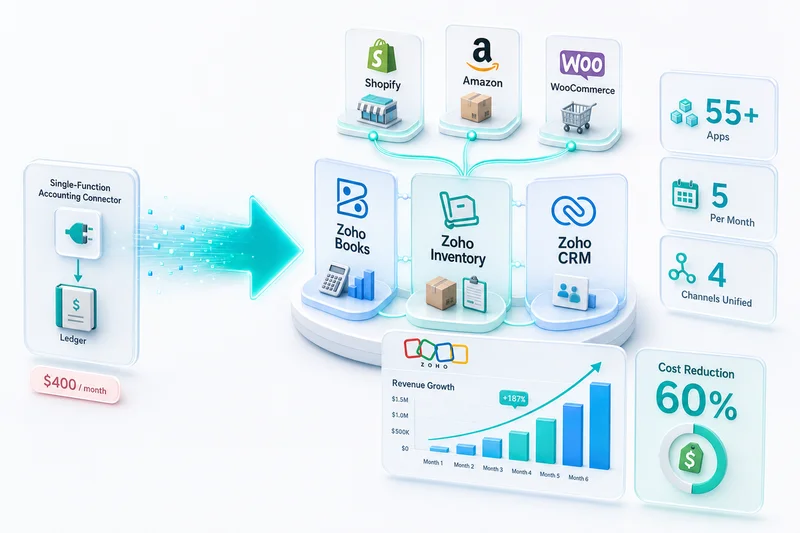
If you're a Shopify seller, Amazon seller, WooCommerce, or eBay retailer evaluating Zoho implementation partners, you've probably seen a wide range of quotes. US-based Zoho consultants typically bill $150-250/hr. Firms like Zolify bill significantly less. The natural assumption is that you're comparing quality. The more useful question is whether you're comparing the same scope.
Most Zoho consultants configure Zoho for businesses. Zolify configures Zoho for eCommerce operations — which is a different problem with different requirements and different failure modes.
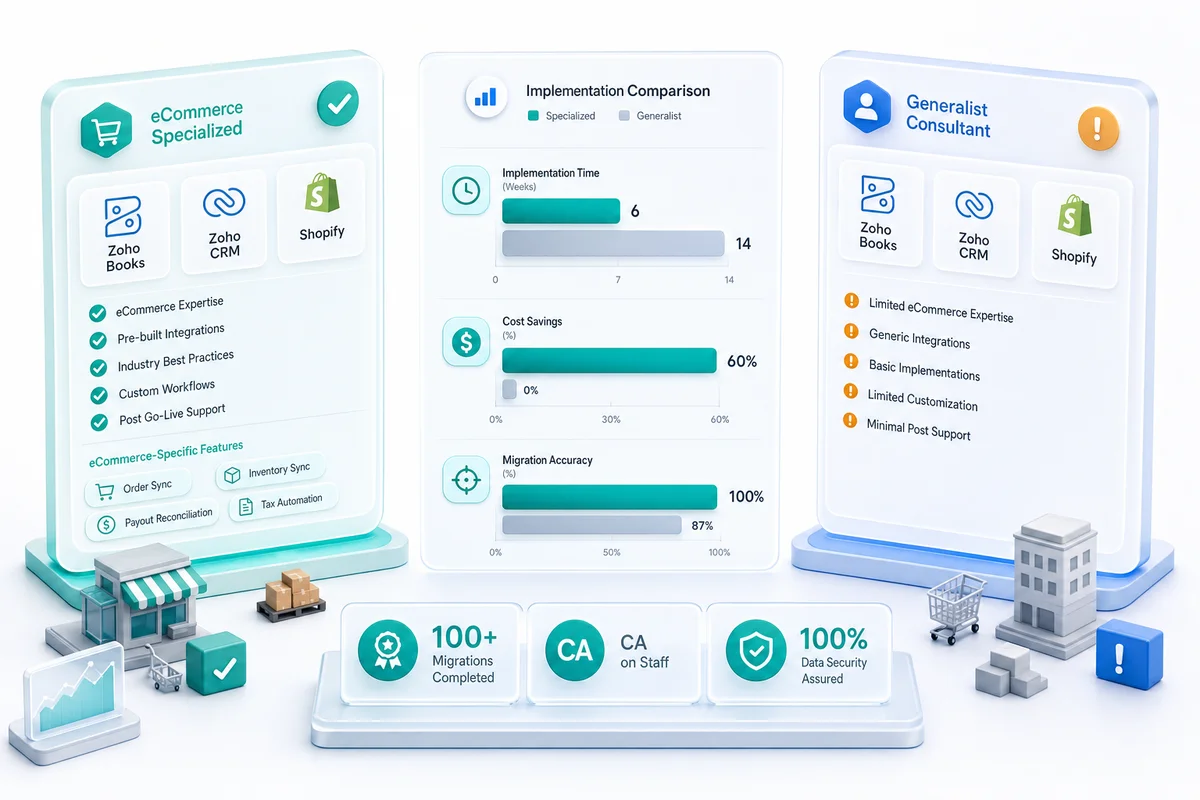
Direct answer: The price gap between Zolify and US-based Zoho consultants for eCommerce runs 60-70% lower. What fills that gap on the US side isn't usually better eCommerce expertise; it's higher operating costs and generalist billing rates. Zolify brings 100+ eCommerce implementations, a CA on staff for every financial setup, and Official Zoho Finance Partner status — at a cost structure that reflects India labor rates without trading away eCommerce accounting depth.
Why generic Zoho consulting doesn't work for eCommerce
eCommerce accounting isn't standard accounting. Standard businesses invoice customers, collect payment, and record expenses. eCommerce sellers on Shopify, Amazon, and WooCommerce do none of those things in the typical way.
A Shopify seller doesn't invoice customers. Orders come in, payment processes through Stripe or Shop Pay (with gateway fees taken out), fulfillment happens (with shipping costs), and the net amount lands in the bank after some delay. Zoho Books doesn't know what Shopify's fee structure looks like out of the box. Neither does a generic Zoho consultant who last implemented Zoho for a law firm.
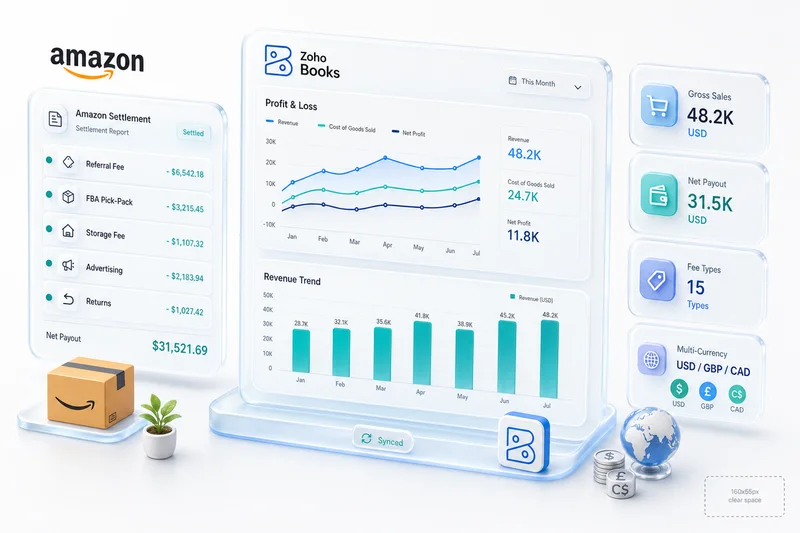
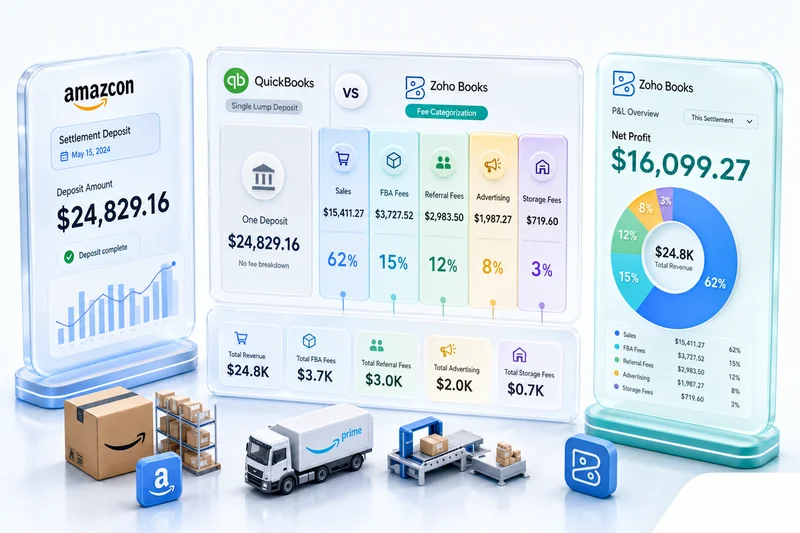
An Amazon seller never touches their order flow at all. Amazon takes the order, processes payment, fulfills (if FBA), and sends a settlement deposit every two weeks with 15+ line item types embedded in the report. Recording that deposit as "Amazon Sales" is wrong in three ways before you've looked at the P&L. A generic consultant who's never mapped an Amazon settlement report in Zoho Books will do exactly that — every time.
These aren't edge cases. They're the default condition of eCommerce accounting.
What generic Zoho consultants typically deliver
A standard Zoho CRM, Books, and Inventory implementation from a US-based generalist firm includes:
- Software configuration to your stated requirements
- Chart of accounts setup based on standard accounting categories
- Basic integration between platforms you specify
- Training and handoff documentation
- A defined post-go-live support window
That scope works for a standard business. For eCommerce, it leaves gaps your accountant finds at year-end, usually at real cost.
What's usually missing:
- eCommerce-specific chart of accounts design (marketplace fees, COGS by channel, gateway fees, refund accounting)
- Test reconciliation against your actual transaction data
- Marketplace Facilitator tax handling for US states
- Multi-channel COGS tracking when inventory moves between Shopify, Amazon FBA, WooCommerce, and eBay
- Multi-currency settlement handling when international marketplace orders convert at different rates
- Documentation your bookkeeper can follow without calling the consultant each time
What Zolify includes that most consultants skip
CA review of the chart of accounts
Every Zolify eCommerce implementation includes a Chartered Accountant reviewing the eCommerce chart of accounts before go-live. That review covers the accounting judgment calls that software configuration can't answer: how to categorize Amazon referral fees vs FBA fees vs advertising spend vs storage fees, how to structure multi-currency accounts for international marketplaces, how returns flow through inventory and accounting without creating phantom revenue.
These decisions get made once at setup. They affect every financial report you produce from that day forward.
Test reconciliation with real data
Before go-live, Zolify runs a test reconciliation against your actual transaction data: real Shopify orders, real Amazon settlements, real WooCommerce payments. If something categorizes incorrectly or doesn't reconcile, it surfaces before launch, not at your quarterly review.
Generic consultants demo with demo data. Demo data doesn't include partial refunds, split shipments, multi-currency conversions at the wrong rate, or Amazon reimbursements for lost FBA inventory. Real data does.
100+ eCommerce implementations in production
The edge cases in eCommerce integrations are the costly ones. Partial refunds that credit gateway fees at a different rate than the original charge. Shopify gift cards that create deferred revenue. Amazon inventory adjustments that need to reconcile against Zoho Inventory. Bundle products where component-level COGS differ.
Most generalist consultants escalate those to support forums. Zolify's team has worked through them across 100+ live eCommerce implementations — that's what separates pattern recognition from problem-solving on the fly.
Official Zoho Finance Partner
Zolify holds Official Zoho Finance Partner status, which is specific to the Zoho Books and Zoho Finance suite — not just a general Zoho reseller badge. That matters practically in two ways.
First, direct Zoho support access. When a Zoho Books behaviour is unexpected or a new integration edge case requires Zoho's backend team, partner firms get a direct escalation path. Generic consultants or non-partner firms submit standard support tickets alongside everyone else.
Second, access to pre-release guidance on Zoho Finance product updates. Platform changes in Zoho Books — new tax handling rules, API changes, new reconciliation features — reach Finance Partners earlier. For eCommerce sellers, that means Zolify's implementation patterns stay current rather than relying on community workarounds.
US-based generalist Zoho consultants may or may not hold any partner certification. Check Zoho's official partner directory before signing.
The cost comparison in real terms
| US Generalist Consultant | Zolify | |
|---|---|---|
| Hourly rate | $150-250/hr | Significantly lower |
| Scope | Standard Zoho configuration | eCommerce-specific implementation |
| Accounting review | Rarely included | CA review included |
| Test reconciliation | Demo data only | Real transaction data |
| eCommerce-specific experience | Limited | 100+ implementations |
| Zoho partner certification | Varies; often none | Official Zoho Finance Partner |
| Platform coverage | Typically 1-2 platforms | Shopify, Amazon, WooCommerce, eBay, Etsy |
| Multi-currency handling | Standard config | eCommerce settlement-rate aware |
| Time zone | US hours | Async with overlap |
| Typical cost (single channel) | $6,000-15,000 | $2,000-5,000 |
| Typical cost (multi-channel) | $12,000-25,000 | $5,000-12,000 |
The cost advantage is structural. India-based operations cost less to run than US-based ones. That's not a quality variable. The quality variable is whether the team has eCommerce-specific expertise, a CA on staff, and the implementation track record to back it up.
For a full breakdown of what each scope tier actually costs - single-channel, multi-channel, and full-stack - see Zoho eCommerce implementation cost: real ranges from 100+ projects.
What to ask any Zoho consultant before hiring
Whether you're evaluating Zolify or a US firm, these are the questions that separate a good implementation partner from an expensive lesson.
How many live eCommerce implementations have you completed? Not demos. Not pilots. Live Shopify or Amazon sellers with production data running through Zoho. Ask for the number and what platforms.
Who reviews the chart of accounts? A software consultant is not an accountant. If chart of accounts design isn't reviewed by someone with accounting credentials, your books will be technically connected but financially wrong.
Do you test with real transaction data before go-live? Demo data doesn't catch eCommerce-specific edge cases. If the answer is no, you're discovering problems post-launch.
What's your Zoho partner status? Official Zoho Authorized Partners listed in Zoho's partner directory have direct Zoho support access. That matters when there's a Zoho platform issue or an unusual integration requirement.
What does post-launch support look like? Zoho implementations require ongoing support as your business changes. Know what's included and what costs extra before you start.
For a complete evaluation framework covering red flags, cost ranges, eCommerce-specific criteria, and what Zoho partner certification actually means before you sign, see how to choose a Zoho implementation partner. For a side-by-side comparison of 12 Zoho development companies by eCommerce platform capability and accounting depth, Top Zoho Development Companies for eCommerce in 2026 covers US-based and India-based options with the same evaluation framework.
Zolify's track record
Zolify is the eCommerce Zoho practice of Satva Solutions, with 100+ eCommerce integrations running in production across Shopify, Amazon, WooCommerce, eBay, and Etsy. Every financial implementation gets a CA review before go-live. As an Official Zoho Finance Partner, we hold a direct Zoho support channel and see Books product changes before they reach general availability.
For eCommerce sellers comparing partners, the right question isn't where the team sits. It's whether they've already worked through the edge cases your setup will hit. Our free eCommerce Ops Audit shows you exactly where your current setup has gaps — before you commit to any implementation.
Frequently Asked Questions
US-based Zoho consultants typically charge $150-250/hr for implementation work. For a mid-size Shopify or multi-channel eCommerce setup (Zoho Books + Zoho Inventory + CRM), expect 40-80 hours of billable work, putting project costs at $6,000-20,000. Most US generalist consultants don't include accounting review or chart of accounts design in that scope, so you still need a CPA on top.
Zolify is the eCommerce Zoho brand of Satva Solutions, which operates from India with US and Australian client focus. The cost advantage comes from lower operating costs, not lower quality. The team includes a CA (Chartered Accountant) and eCommerce integration engineers who have completed 100+ live eCommerce implementations. All client-facing work is in English and follows standard project management practices.
Most Zoho consultants configure the software generically. eCommerce accounting has specific requirements: marketplace fee separation, multi-channel COGS, Marketplace Facilitator tax handling, FBA inventory valuation, and settlement reconciliation. These aren't default Zoho configurations. Zolify has a CA who reviews every eCommerce chart of accounts before go-live, and engineers who've solved the edge cases (partial refunds, multi-currency settlements, split shipments) that generic consultants haven't encountered before.
Yes. Most Zolify clients are US-based Shopify, Amazon, and WooCommerce sellers. Project work happens asynchronously with timezone overlap for calls. The CA on staff is familiar with US accounting standards, Marketplace Facilitator tax rules, and US eCommerce-specific financial requirements. Zolify is an Official Zoho Finance Partner, which means direct Zoho support channel access regardless of where client operations are based.
Three things most US generalist consultants don't include: CA review of the chart of accounts for eCommerce-specific categories (marketplace fees, COGS, returns, gateway fees); test reconciliation against real transaction data before go-live, not just demo data; and documentation of the accounting logic specific to your platform mix. Without those, the integration connects but the books aren't right.
See exactly where your Shopify, Amazon, or WooCommerce ops are leaking — free.
Get a personalised eCommerce Ops Audit: inventory gaps, accounting leaks, and order-flow bottlenecks — with a Zoho fix roadmap. Delivered in 48 hours, at no cost.